💼 Case Studies
Examples of my experience as a Design Leader
🛠️ Projects & Products
Projects and Products I've led

Design team safety in the AI era
Founding Design team safety through inclusion — Part 1
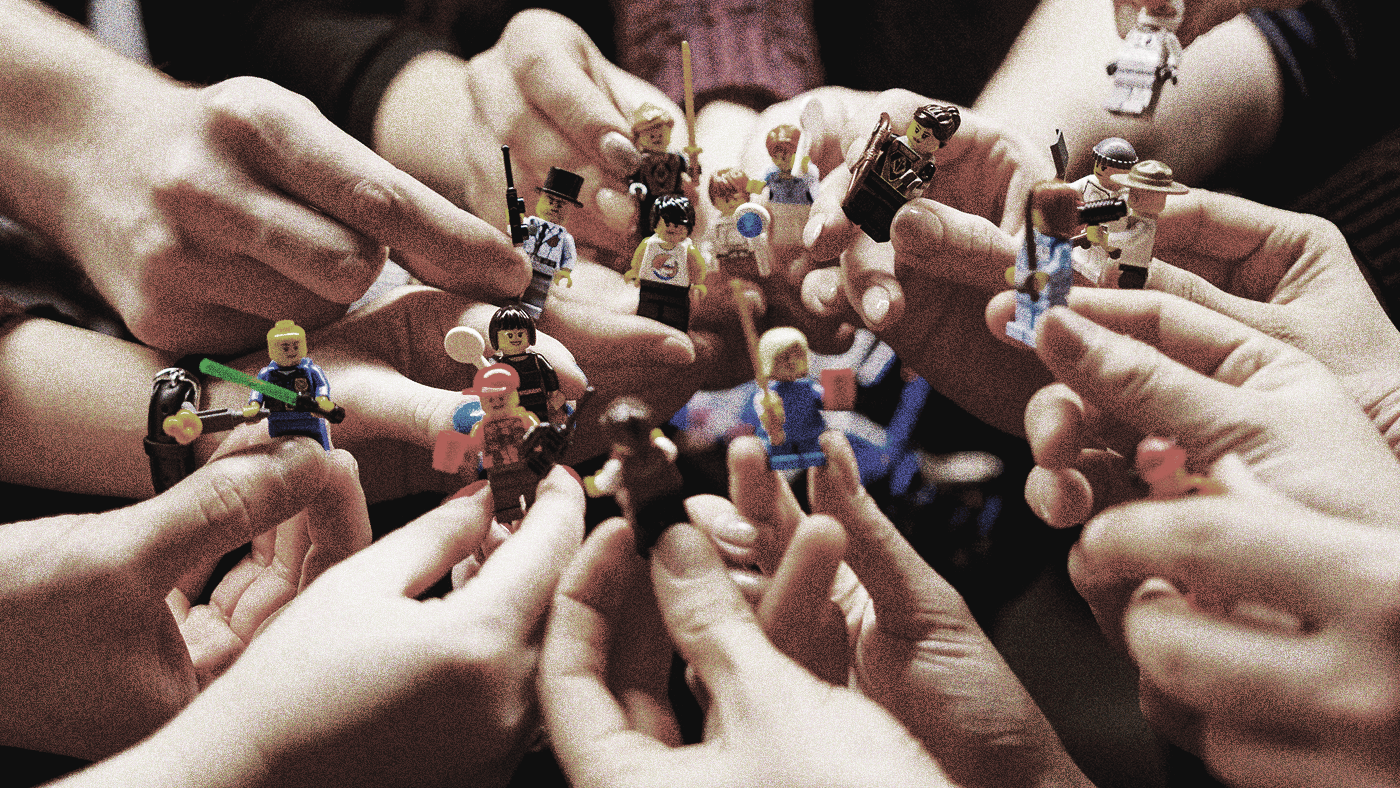
At this point in my career, I’ve been fortunate to grow and lead three different design teams in various software orgs.
Just the other day while hunting for my next role, I encountered a unique question amid all the application monotony → “Tell us about your proudest achievement”. My initial reaction was to plug in a recent case study but I stewed on it a bit.
As I thought more about the scale of “proudest” I zoomed out. Was it any one of the things I’ve designed, built or understood? Or is it actually how great it’s been when your team is truly gelling.. when you’re collectively connecting the dots between user-problems and business goals with insightful, innovative solutions? It was the latter.
It’s kind of like Team Flow 🏄

I can remember examples of this with each of my teams. Breakthroughs of sorts when, because of the team harmonization, you accomplish something wonderful together. Let’s call it “Team Flow”.
While I have designed and shaped wonderful experiences over my career, I feel most accomplished from the times I’ve brought individuals together into productive design teams via fostering a strong “sense of team.” I’m now realizing just how much of this harmonized team dynamic is rooted in safety.
A past team and I recently got back to this state of Flow. For a period, the disruption that AI brought to our industry hit close to home. Clarity blurred. Relationships strained. Learning felt aimless. Morale dipped. Collaboration ceased.
Eventually, we did get back to a state of Team Flow. It wasn’t, however, just a result of my efforts, but a result of working together with other leaders — redefining expectations around up-skilling and production, staying humble and, most importantly, learning together.
Now I’m not perfect. And you can’t always control the environment around you and your team. And conversely, living and working within a bubble where you protect your team from a negative surrounding environment can feel good for a bit, but bubbles always burst.
For me, it’s about learning. And I’ve learned tons from each team building experience. It can take time for a team to really trust each other — but when you arrive at safety, I’ve seen innovation, learning, productivity, and collaboration all bloom.
Why Safety? 🦌
Feeling safe leads to a lot of positive effects and influences on any creature. Despite our evolved states, we still suffer from shared subconscious and physiological responses to feeling threatened or with risk of harm.
Safety can mean different things depending on context — so I’d like to quickly define it. Safety is usually defined as being free from harm or hazards. I think that might be overkill for a team at the workplace at this point..🤞 so maybe more like: Safety is being free from punishment, judgment, humiliation or exclusion. This is often described as Psychological Safety.

I’m certainly not the first to discuss it surrounding Design Teams either. Jenny Shirey, for example, wrote some wonderful articles on the subject. She shares tons of great techniques and activities for working towards safety — concepts like strength-sharing, learning together, retros and team-critiques.
Working in Design Leadership I’ve found my own approach to some of these techniques. Overall I simply want to accomplish a wonderful team culture where it feels safe to innovate and produce great experiences. And right now, safety is even more important to help shepherd a team through the AI era. With the current industry expectations of AI experimentation and innovation, design teams need psychological safety to truly adapt and evolve.
The Four Stages of Psychological Safety
I’ll lean on Dr. Timothy R. Clark’s 4 stages of Psychological Safety to share some things I’ve found helpful. The four stages represented in his approach are as follows:
Inclusion Safety
Learner Safety
Contributor Safety
Challenger Safety
Interestingly, Clark’s stages are both cumulative and sequential — suggesting that advancement is dependent on carefully accomplishing each, before advancing into the next.
In part 1 of this four-part series I’ll focus on what I would consider foundational in forming a strong team — Inclusion Safety. Across the first two articles we’ll explore techniques to steward individuals into feeling like they belong and subsequently, that it’s safe to learn: critical these days for a team beginning to navigate their way through AI. In the subsequent articles I’ll focus on what I would consider practice and affirmation across the Contributor and Challenger Stages.

Stage 1: Inclusion Safety
This stage is centered around some pretty basic human needs — to connect and belong. Thinking about these stages as a sequence, this is the first step. Everyone needs to feel included and like their opinions and ideas matter. It’s about forming a shared Team Identity.
Inclusion Safety might feel more apparent for a team that is forming or growing. But, shifting away from safety here can happen to any longstanding team with the right surrounding conditions. I‘d guess many of us have experienced being shaken from our sense of belonging with how the software industry has been in rapid evolution lately.
In my opinion, the AI evolution has pushed a lot of Designers into a less comfortable place. These days fleshed-out ideas, designs and even prototypes can come from nearly any discipline. It’s wild. But, when I think about it, we’ve always advocated that good ideas can come from anyone and anywhere. While change is hard and uncomfortable, it is really a constant in life. I remember switching from Sketch to Figma. And before that, Adobe Creative Suite to Sketch. I remember letting go of others like Flash, Freehand, and Director. Tools change — but Design’s ability to understand users and what needs will drive value for the business hasn’t.
How we implement our skills is shifting — which is dragging our sense of identity with it. We all know what it feels like when your skills are no longer feeling valid. Your sense of belonging weakens. Your sense of “team” begins to fade. As a design leader, re-establishing a sense of inclusion is critical to helping designers and teams move back into a position of stewardship rather than feeling like the ship is sinking.
How I’ve tried to achieve Inclusion Safety
Approaches I’ve leveraged: To help enable Inclusion Safety, I’ve repetitively relied on getting to know each other while I model traits I admire like vulnerability and equity. For me, this stage is about forming relationships.
Getting to know each other 🤓
The idea of getting to know your fellow teammates might sound pretty obvious. And it is. But, ensuring we’re getting time to share our unique identities with each other is still the very first thing I focus on when establishing or re-establishing inclusion. It doesn’t mean everyone is best friends — but it does mean that uniqueness is celebrated and respect is simply a foundational aspect of being on the team. With acceptance and respect, individuals can really get past the surface level stuff and collaborate.
Structured meeting habits
I’ve found team routines to be a great tactic for getting familiar. Leveraging agile processes and ceremonies like daily stand-ups, 1-1s or bi-weekly team design shares enables everyone to catch up on individual progression and experimentation. Routines like these create natural cadences within work to learn about each other and form structured interaction within the team.

Interest and skill sharing
One of my favorite things about becoming familiar with other unique humans is learning about their specific interests, hobbies and craft skillsets. Whether its gaming, plants, knitting, cooking — there’s likely tons of overlapping shared interest present to rally a team together. I’ve found that making time for this with a team helps tremendously with inclusivity. And it spawns easy segues to sharing interests and skills within work.
Currently, it is pretty important to know and share what new skills or perspectives folks have encountered with AI. At this point, there’s really no wrong technique with AI-enhanced tools or techniques. Most teams and organizations are experimenting with different tools and processes. Encouraging teams to share where they have had success with or that they’ve discovered something new means the whole team moves ahead faster.
Of course sharing varying levels of oneself necessitates some vulnerability.

Modeling 🫶
Another technique I’ve leveraged repetitively to spur Inclusion Safety is modeling.
In my experience, the impactful leaders are the ones who can calmly help you navigate while keeping you in the driver’s seat. It’s someone who respects others and cares about your humanity, dignity, and value.
Modeling is one way to coach from the passenger’s seat — we all learn through observation and your team should have plenty of educational opportunities from watching you.
Three areas I tend to gain positive team culture with are vulnerability/humility, facilitating equal participation and consistently communicating.
Modeling Inclusion through Vulnerability and Humility
Modeling inclusion requires a shift away from top-down authority to a supportive, attentive style of leadership. One of the most powerful ways I’ve found to do this is to demonstrate fallibility and vulnerability. I’ve found that in my own experience I’m drawn to authentic individuals who can admit their mistakes and pass along credit to the right individual.
For my teams, I very visibly admit what I don’t know. For anyone that tells you they know everything and have all the answers — good luck. Just like how we all have gaps in our understanding, everyone makes mistakes. So I also visibly take ownership of my mistakes and ensure I have a plan to ensure it doesn’t happen again. I try to show how uncertainty can easily be translated into a solvable problem. Break it down just like you would with any user-problem, work together and chart towards a solution.
Of course, sometimes you need to have the answer. However, speaking up and suggesting that you’re not sure and then pulling everyone into a path to discovery is a really cool move. Encouraging those around you to shift into a creative-problem-solving mindset rooted in curiosity with you is powerful. This type of behavior easily spills out into cross-discipline collaboration too. Again, maybe you do have answers, and there’s nothing wrong with being decisive — but building a reputation as someone to team up with and track down a solution together means you’ll get asked to collaborate and share in learning something new. The more you know. 🌈
One last thing on modeling or demonstrating humility: We’ve all padded our contributions as we bring them into a vulnerable place. “I’m probably missing something but…” It’s a slippery slope where demonstrating humility is important, but you wind up degrading your contributions before they even have a chance. I’ve tried to push myself to begin with other alternatives — “I have an idea I’d like to share…” or even “What if…” Ask for participation and then propose in the hypothetical. This pulls everyone into your contributions but opens the door for refinement and exploration.
Facilitating Equitable Participation
Another means I’ve employed to substantiate inclusion through modeling is actively managing team dynamics to ensure all voices are heard and valued. I think of this as creating room and space for everyone. One thing I’ve noticed and even felt over my career is that we all don’t innately feel comfortable to share our voice.
In terms of boosting each individual’s comfort level, this is one example of where having familiarity with them becomes advantageous. While they may be less enthusiastic about jumping in with their ideas or concerns — from having built a rapport I’ve been able to bring their contributions into both the team setting and broader.
For example: “Team — Olive shared some concerns with me about missing a validation step here.. Olive — did you want to contribute more in regards to that?” Of course, for certain individuals that could feel pushy. Again, getting to know them will reveal the right tact. If all else fails — leverage routine 1–1 time — “I’ve noticed you’ll share really insightful, valid ideas/concerns with me, would it be ok if I bring these up with the team occasionally?” The goal here again is model equitable space — and help everyone feel valuable.
Visible and Consistent Communication
Inclusion must be made visible through consistent daily habits and environmental cues. As discussed earlier, while routines in general are important, routine patterns of communication are paramount.
The idea of setting or establishing office hours or holding an open meeting for windows of time isn’t novel. But with additions to your calendar like these, time is made available intentionally. Now your team members have obvious opportunities to share questions and obtain feedback without the concern of impacting schedules.

Relationship building 🤝
Building relationships is not only a foundational way to increase the mutual feeling of inclusion, but a through-line across all stages of psychological safety. The more vulnerably authentic I’ve been with my team, the more I get to know their authentic selves. As that shared vulnerability spreads into other relationships, it’s pretty easy to start feeling more and more included. No one is better or perfect — but we sure are all unique. 🤩
And again, what a great way to mend some of the distance AI has caused between the cross-disciplines — especially EPD — Engineering, Product and Design. Instead of racing and competing to accomplish something with AI the fastest — realigning on shared goals can quickly reform partnerships and collaborations.
I highly encourage my teams to create and foster their relationships. Certainly within a team, this can yield collaboration and productivity as ideas and skills are shared more freely. Take the relationship building skill to your surrounding peers and now designers are building bridges into other disciplines.
UX’ing your peers
I often refer to this as UX’ing your peers. As Product and UX Designers, we routinely adopt other disciplines as we develop software for our users. Let’s say for example, we’re working on an app that enables a Doctor in Sports Medicine to transcribe and track sessions with patients — a good designer would learn a great deal about medical professionals in that field, where and how they work, what their goals and tasks are, etc. You might even say we try to step into the shoes of our users. As the highly empathetic individuals we are, we likely feel some of what our users do.
Taking what it means to know your users and applying this to your coworkers likely means developing an appreciation for their skills and goals. Active relationships also contribute to a mental model of what’s going on around in your daily environment. Subsequently this creates opportunities to solidify partnerships by supporting them in their goals and keeps individuals included and invested.
Summary: Stage 1
These are certainly not all encompassing but some of my goto tactics for establishing and growing Inclusion Safety as a first step towards Psychological Safety on a Design team. Applying our empathetic skillsets to forming relationships both within and around a design team can yield amazing collaboration and productivity. And as a Design leader, I’ve seen how modeling vulnerability and establishing team routines can really foster a strong sense of team.
Next up: Learner Safety
While this article refers to these as stages, I like to think about them as cycles. Inclusion is something that needs to be maintained. Unfortunately, inclusion can be impacted almost any time. A lot of us are experiencing impact right now. To get back to Team Flow and overcome change, it’s important to help everyone recover their shared feeling of inclusion and belonging — strengthening the team identity again.
Once a foundational layer of inclusivity has been established, you can shift the team into safely learning — ideally together. In the next article I’ll discuss some methods I’ve leveraged to establish Learner Safety.